
Views: 0 Author: Site Editor Publish Time: 2026-08-28 Origin: Site


The off-road accessory market is heavily commoditized today. Resellers relying solely on off-the-shelf inventory face brutal price wars. These common practices lead to shrinking margins across the board. Transitioning to custom-spec orders solves this margin erosion directly. Distributors can build highly profitable, proprietary product lines. You can target specific off-road subcultures like dune bashers or mud park riders. Customizing your gear protects your pricing power in a crowded space. This definitive guide explores commercial-grade customization variables. We will evaluate how to source an optimal Off Road Flag Whip inventory. You will learn to balance feature sets against unit economics effectively. We also examine long-term durability and essential vendor reliability. Our goal is to help you build a resilient, differentiated brand.
Differentiate via Hardware: Moving beyond standard lengths to offer custom flex ratios and heavy-duty spring bases directly reduces customer warranty claims.
Ecosystem Integration: Modern buyers expect Bluetooth and app-controlled LED synchronization with existing vehicle ecosystems (rock lights, underglow).
Brand Protection: Laser-etched hardware, proprietary flag materials, and retail-ready packaging elevate perceived value.
Risk Mitigation: Strict evaluation of IP ratings (IP67/IP68) and phased minimum order quantities (MOQs) are critical when selecting an OEM/ODM partner.
Generic imported SKUs degrade your brand equity quickly. They severely limit wholesale margins in competitive markets. Buyers easily cross-reference standard products online. This transparency forces resellers to slash prices continually. Competing strictly on price is a losing battle. You need differentiation to survive modern retail landscapes.
A successful custom run must achieve three specific outcomes. If it fails these metrics, the customization effort wastes capital.
Solve a specific terrain problem. For example, wooded trails require extreme impact resistance.
Command a minimum 40% retail markup. This ensures adequate profitability after standard wholesale distribution costs.
Keep return rates below industry averages. You should always target a defect rate under 3%.
Market segmentation provides a clear customization roadmap. You must structure your order based on the end-user. State park riders need strict daytime visibility compliance. They prioritize durable nylon flags and standard safety colors. Night event enthusiasts demand high-density LED syncing instead. They value complex chasing patterns over daytime compliance. Understanding these profiles guides your manufacturing specifications perfectly. You cannot sell a single configuration to every rider.
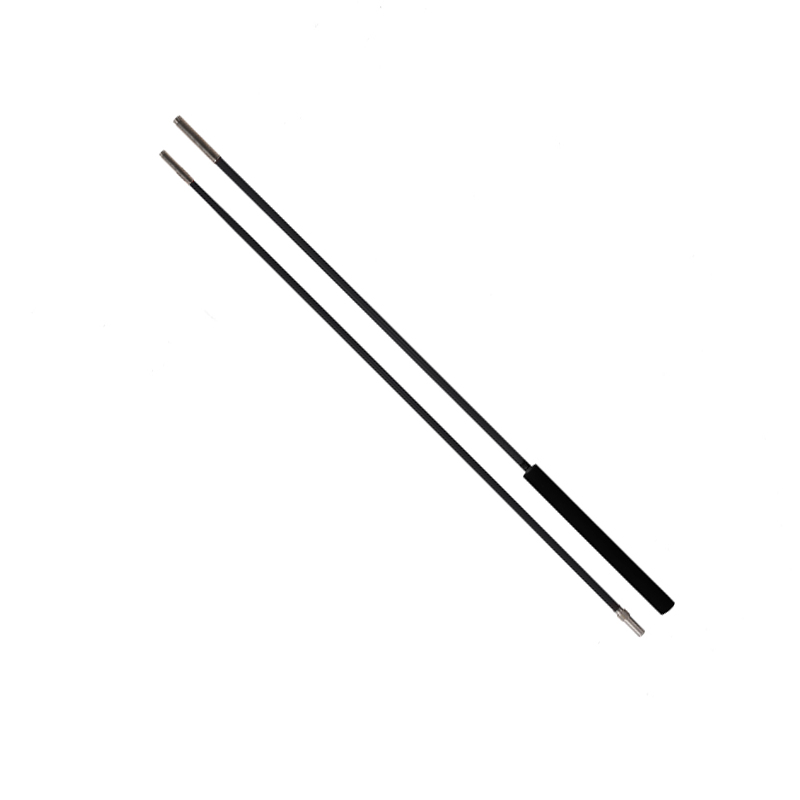
Length and flexibility dimensions dictate product performance. You must evaluate trade-offs between 2ft, 3ft, 4ft, and 6ft variants. Shorter whips survive tight brush easily. Longer variants offer superior visibility across large sand dunes. End-users select lengths based on their primary riding environments.
Material specs play a massive role here. Polycarbonate tubing offers excellent rigidity. EVA transparent heat-shrink tubing provides superior flexibility. Thicker tubing prevents snapping during severe impacts. However, it significantly increases wind drag at high speeds. This drag stresses the mounting base heavily.
Comparison of Physical Dimensions and Target Applications
Length Variant | Primary Terrain | Ideal Material Spec | Wind Drag Impact |
|---|---|---|---|
2ft - 3ft | Wooded Trails / Mud Parks | Thick EVA Tubing | Low |
4ft | Mixed Use / Desert Racing | Hybrid Polycarbonate | Moderate |
6ft | Open Sand Dunes | Lightweight Polycarbonate | High |
Base and mounting systems remain crucial for durability. Quick-release mechanisms dictate user convenience entirely. You must customize bearing and lock-pin quality carefully. Inferior pins seize rapidly after heavy dust exposure. Mud accelerates this mechanical degradation. We recommend specifying stainless steel internal components. They resist corrosion during wet off-road conditions.
Spring bases protect the core electronics. You should specify heavy-duty barrel springs for longer whips. These springs absorb violent kinetic shocks effectively. They prevent the internal LED core from shattering. Solid bases transfer every impact directly into the circuitry. This transfer causes premature diode failure.
Thread standardization ensures broad market compatibility. Ensure your base threads align perfectly. Dominant UTV aftermarket roll cage mounts use specific sizes. Standard 1/2" or 3/8" thread pitches work best. Non-standard threads frustrate end-users immediately. They drive up return rates for incompatible hardware.
Illumination density defines nighttime visual appeal. Standard straight-strip LEDs offer a budget-friendly baseline. They illuminate well but leave distinct dark spots. 360-degree spiraled LED ribbons solve this issue completely. They cost more to manufacture. However, they deliver vastly superior nighttime visibility. Customers happily pay a premium for seamless illumination.
Higher LED density drastically increases heat generation. Thermal management requires rigorous evaluation during factory prototyping. Trapped heat degrades LED lifespan quickly. We advise testing prolonged illumination in warm environments. Enclosed transparent tubes act like tiny greenhouses.
Software Ecosystem Feature Matrix
Controller Type | Connectivity | Key Features | Market Positioning |
|---|---|---|---|
Standard RF Remote | Radio Frequency | Basic Colors, Flash Modes | Entry-Level / Budget |
Bluetooth Module | Smartphone App | Custom Palettes, Music Sync | Mid-Tier / Enthusiast |
Integrated Smart Node | App + Vehicle ECU Sync | Brake Sync, Turn Signals | Premium / Pro-Builder |
Controllers and app integration drive modern sales. Basic RF remotes feel outdated today. Buyers want seamless smartphone control via custom applications. You must specify Bluetooth integration. Using proprietary or white-labeled mobile apps elevates your brand. It removes generic factory names from the user experience.
Integration features determine the actual user experience. Brake light syncing adds practical safety functionality on trails. Turn signal integration bridges off-road and street-legal use. Chasing functionality provides dynamic moving light patterns. You must ensure compatibility. Unified vehicle lighting controllers govern modern builds. Many riders synchronize their whips directly. They match existing rock lights or underglow systems seamlessly. Unified ecosystem integration creates fierce brand loyalty.
Direct-to-hardware branding establishes your product authority. Custom laser engraving on the aluminum base works exceptionally well. This process adds a highly premium aesthetic. It requires a minimal per-unit cost increase. Stickers peel off easily in harsh environments. Laser etching survives mud and pressure washing perfectly. It withstands intense sun exposure indefinitely.
Proprietary flag designs further separate your inventory. They block generic competitors from copying you. You should mandate double-sided stitching for longevity. Heavy-duty nylon withstands high-speed wind fraying better. Standard polyester shreds quickly on open trails. UV-resistant ink prevents safety colors from fading prematurely.
Retail versus e-commerce packaging demands strategic planning. You must design cylindrical or reinforced box packaging carefully. It needs to withstand rough LTL freight shipping. Wholesale accounts require pallet-ready box dimensions. Simultaneously, it must survive single-unit FedEx dispatch. Dropshipping requires extremely rigid cardboard cores. Weak packaging leads to bent inventory during transit.
Dimensional weight severely impacts your profit margins. Shipping a 6ft box incurs massive courier surcharges. You must factor dimensional weight calculations into custom box sizing. Streamlining packaging dimensions protects your bottom line directly. Shaving one inch off a box diameter saves thousands annually.
Regulatory compliance overlays open new retail channels. Many state OHV parks enforce strict visibility rules. Ordering daylight-compliant flags meets these specific regulations. You should incorporate standard safety orange or red materials. Embed these colors alongside the LED functionality. This dual-purpose design appeals widely. Safety-conscious fleet buyers and park rangers prefer compliant hardware.
Quality control and ingress protection define hardware survival. You must demand verifiable IP67 or IP68 waterproof ratings. Moisture ingress remains the leading cause of failure. Water corrodes internal wiring rapidly. Sand destroys poorly sealed quick-release bearings.
Navigating MOQs and lead times requires sharp negotiation. Do not commit to a massive container immediately. We recommend negotiating split shipments first. Tiered MOQs reduce initial financial exposure. Start with a 100-unit pilot run. Use this batch to test your custom configuration. Run real-world scenarios before bulk ordering. Scale up your orders only after validating the hardware.
Your vendor evaluation framework needs rigorous structure. Never accept verbal quality assurances from overseas suppliers. Follow these strict verification steps:
Request detailed raw material specification sheets.
Review the bill of materials (BOM) closely.
Identify exact LED chip manufacturers.
Gauge internal wire thickness for proper load handling.
Conduct independent stress-testing on physical samples.
Utilize vibration tables to simulate rough terrain.
Perform deep submersion tests to verify IP ratings.
Do all this before signing the final purchase order. A reliable OEM partner welcomes this rigorous testing process. They will supply documentation willingly. Avoiding these validation steps guarantees expensive warranty replacements later.
Customizing your off-road inventory is rarely about flashy aesthetics alone. It is about engineering a highly resilient, marketable product. This strategic approach protects your business margins effectively. By dictating hardware specs, you eliminate direct price comparisons. You build a brand synonymous with reliability.
Procurement managers must finalize their technical requirements immediately. Define your optimal lengths, IP ratings, and controller types. Contact two to three shortlisted OEM partners next. Request functional prototypes based on these strict guidelines. Evaluate these samples rigorously in the field. Finalize your annual volume contracts only after thorough physical validation.
A: Standard MOQs vary widely based on your required customization level. Typical industry MOQs for basic white-labeling usually range from 50 to 100 units. Deep hardware and software customization requires factory retooling. These complex orders often demand 500 or more units to justify the initial setup costs.
A: Never rely on verbal claims alone. You should advise your procurement team to request third-party IP67 or IP68 testing certificates. Additionally, you must conduct independent sample submersion tests. Submerge prototype units in water for several hours prior to placing bulk orders.
A: Yes, dimensional weight severely impacts freight expenses. Carriers calculate shipping based on package volume rather than physical weight alone. This disproportionately affects 4ft and 6ft items. You need streamlined, high-density packaging in B2B logistics. Reducing excess cardboard width saves substantial delivery costs.


