
Views: 0 Author: Site Editor Publish Time: 2026-08-02 Origin: Site


Off-roading demands thorough preparation and reliable equipment. Purchasing the wrong whip flag often results in snapped rods on the first trail run. You might face unexpected legal citations at state parks. Poor choices can even cause damaged vehicle mounting points. This decision-stage evaluation cuts through marketing noise. We focus strictly on material durability, verified vehicle fitment, and compliance realities.
We provide a clear framework to select highly visible Off-Road Whip Flags based on your specific environment. Whether you tackle open sand dunes or navigate tight wooded trails, the right gear matters. You will learn how to match equipment perfectly to your UTV, truck, or ATV. We also cover crucial mounting hardware constraints. Our guide helps you avoid common pitfalls, protects your vehicle, and ensures total trail readiness for every ride.
Understanding local laws keeps you on the trail and prevents costly citations. Different terrains demand entirely different equipment setups.
Major off-highway vehicle (OHV) destinations enforce strict visibility rules. Popular locations like Idaho, Glamis, and Silver Lake require specific safety standards. Rangers routinely check these specifications at park entrances.
You must display mandatory pennant dimensions. Parks commonly require a 6-inch by 12-inch flag. They also mandate high-visibility colors. You need solid red or solid orange materials. Avoid novelty designs, skull logos, or intricate patterns. These custom designs often fail official park inspections.
The "ground-to-tip" height rule represents the most critical compliance factor. Most state laws require an 8-foot to 9-foot minimum overall height. This measurement starts from the ground and ends at the very top of your flag pole. Always measure your vehicle's baseline roof or bed height before making a purchase.
Your riding environment dictates your equipment choice. Dune riding requires maximum height for safety. You need towering flags to signal your presence when cresting blind hills. Many dune riders run dual flags for maximum visibility in deep sand bowls.
Wooded and tight trails present a completely different challenge. You face constant tree canopy strikes. Low branches will instantly snap rigid poles. Forest riding requires shorter, highly flexible rods. These flexible designs survive aggressive impacts and snap back into position safely.
Choosing between lighting technologies impacts both durability and budget.
Selecting the correct rod length ensures legal compliance and structural survival.
Different lengths serve entirely different vehicle types and mounting positions.
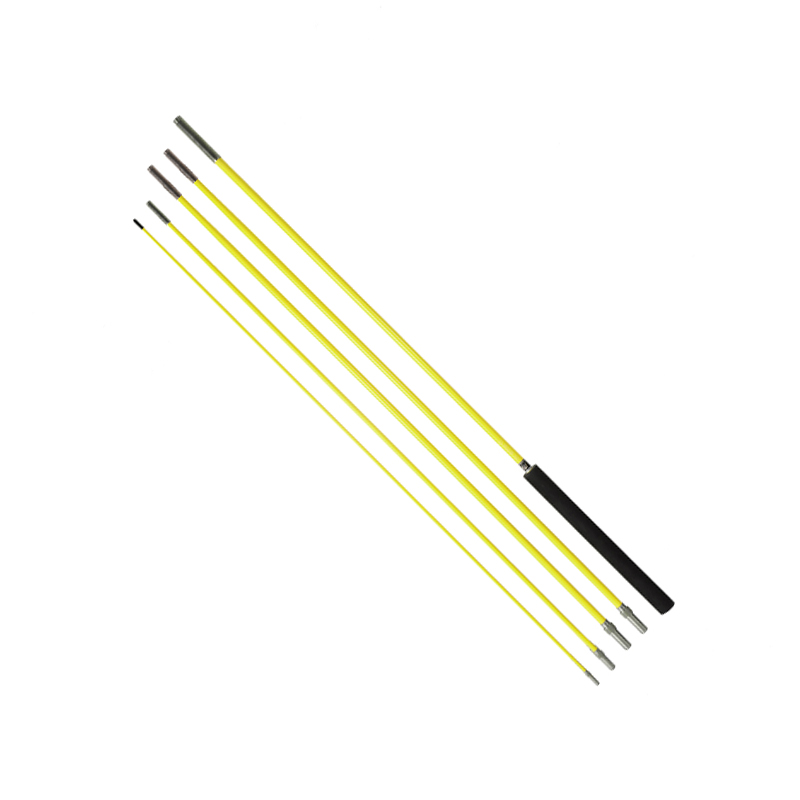
4-Foot: These are best for UTV roof mounts. A typical UTV roof sits about five to six feet off the ground. Adding a four-foot pole easily achieves the mandatory nine-foot total height. Shorter poles endure less wind drag and survive longer.
6-Foot: Consider this the industry standard length. Drivers use them primarily for truck bed mounts and ATV rear racks. A six-foot pole mounted to a truck bed rail easily clears the cab roof and meets park height regulations.
8-Foot: This represents a niche application. You need an eight-foot pole for low mounting points. If you mount a flag to a Jeep bumper or an ATV axle, you require massive length to achieve the legal overall ground-to-tip height.
Material science directly determines how long your equipment lasts. Manufacturers use several distinct construction methods.
Solid fiberglass offers incredible daytime toughness. Hollow polycarbonate tubes commonly house internal LED strips. Composite blends attempt to balance flexibility and stiffness.
You must conduct a basic risk assessment regarding flex ratios. Stiff rods transfer impact energy directly downward. This energy hits the mount and causes bracket failure. Conversely, overly flexible rods present their own dangers. They whip violently at high speeds. This extreme whipping motion can damage vehicle paint or strike rear passengers.
Your mounting hardware acts as the foundation for your visibility system. A weak base guarantees broken equipment.
Fixed mounts bolt directly to your vehicle frame or roll cage. They offer ultimate reliability and lower initial costs. They feature zero moving parts to jam or break.
However, fixed brackets carry distinct cons. You require hand tools for removal. You also face a high risk of snapping the flag. Drivers frequently forget about fixed poles before entering garages or loading into low enclosed trailers.
Quick-release bases solve trailer clearance issues instantly. Manufacturers typically offer ball-bearing lock designs or pin-style systems. Ball-bearing models slide smoothly, while pin styles use a cotter pin for retention.
You must understand the implementation reality. Sand, dust, and thick mud easily jam cheap quick-release mechanisms. We highly recommend regular dry-lube maintenance. Spraying the locking collar periodically ensures flawless operation after a dirty weekend run.
| Mechanism Type | Primary Advantage | Potential Drawback | Maintenance Need |
|---|---|---|---|
| Fixed Bolt-On | Maximum structural strength | Requires wrenches to remove | Periodic bolt tightening |
| Pin-Style Release | Simple, visible locking engagement | Pins can rattle loose or bend | Inspect pin integrity |
| Ball-Bearing Collar | Instant, tool-free removal | Sand easily jams the collar | Frequent dry-lube application |
Spring bases act as vital shock absorbers. They are absolutely essential for surviving high-speed aerodynamic impacts and sudden branch strikes. A rigid base transfers all shock into the pole, causing catastrophic fiberglass fractures.
Apply strict buying criteria here. Look for stiff, heavy-duty steel springs. Soft springs look great in the parking lot but fail dynamically. Soft coils cause the flag to lay completely flat at highway speeds. This horizontal position defeats the entire purpose of a tall visibility flag.
Always reject cheap cast alloys. Trail forums and customer reviews constantly highlight cast metal failures. Cast parts shatter under shear stress.
You must require 304 or 316 stainless steel. Alternatively, choose CNC-machined billet aluminum. These premium materials prevent corrosion. They resist shear stress fractures during aggressive dune jumping or rock crawling.
Generic hardware rarely fits well. You need geometry tailored specifically to your machine.
The UTV industry relies on standardizing roll cage tube diameters. Popular models like the Polaris RZR and Can-Am X3 typically use 1.75-inch to 1.875-inch tubing. Honda Talon and certain Yamaha models scale up to 2-inch tubing.
You must evaluate clamp-style mounts carefully. Ensure the inner diameter matches your roll cage exactly. Alternatively, utilize factory-welded rear tabs if your machine includes them. For example, the Maverick R features specific mounting considerations built directly into its rear suspension geometry.
Full-size vehicles demand different mounting locations. Truck owners frequently utilize bed rail stake pockets. Jeep enthusiasts prefer spare tire carriers or specialized tailgate hinges. Some drivers even use front bumper recovery points.
Wiring considerations become critical for long-wheelbase vehicles. Routing LED harnesses through truck beds requires careful planning. You must protect wires from chafing against sharp sheet metal. Always run split-loom tubing along the chassis rails.
Two-wheelers and compact quads demand extreme weight reduction. Heavy LED whips alter the center of gravity significantly on a dirt bike. This extra top weight negatively impacts cornering and jumping.
Mounting locations vary by design. Axle mounts keep the pole low but expose brackets to rock strikes. Rear subframe mounts offer better protection but require customized clamping solutions to grip aluminum subframe rails.
Trail experience reveals exactly how and why safety equipment breaks.
Electrical issues plague cheap illuminating poles. You will often see sheared wiring directly at the base of LED whips. This happens due to a complete lack of strain relief. Constant wind sway simply tears the fragile copper wires apart.
Pennant destruction represents another common failure. High-speed wind shreds cheap fabric in hours. Look for double-stitched or heavily reinforced flag materials. Nylon webbing borders prevent fraying.
Hardware constantly loosens due to high-frequency engine vibration. You must mandate the use of nylon lock nuts during installation. Always apply medium-strength threadlocker to every single bolt. Hand-tightened hardware will vibrate off during your first ride.
Follow this systematic process to select the perfect Off-Road Whip Flags for your rig.
An off-road whip flag acts as a critical safety investment, not just a cosmetic accessory. Proper visibility prevents catastrophic collisions in unpredictable terrain. Selecting the right length ensures you remain legally compliant at heavily patrolled OHV parks.
We reiterate one crucial point. Prioritizing a high-quality mount and a heavy-duty spring base will save you money on replacement rods over the long term. Cheap bases break expensive poles. Direct your budget toward structural reliability first.
Take action today by measuring your vehicle. Browse specific fitment categories like UTV clamps, truck bed mounts, or complete LED kits based on your exact vehicle specifications. Equip your rig properly and hit the trails with absolute confidence.
A: Most state OHV parks and dune systems require an overall vehicle-plus-flag height of 8 to 9 feet from the ground to the tip. Measure your vehicle's highest mounting point. If your roof is 5 feet tall, you only need a 4-foot flag to achieve the 9-foot requirement safely.
A: Yes. A 4-foot flag mounted securely on a 5-foot UTV roof easily clears the standard 8-foot minimum legal height. However, mounting that exact same 4-foot flag down low on your front bumper will leave you too short, resulting in a likely citation.
A: Spring bases are highly recommended. They absorb sudden impacts from low-hanging tree branches and mitigate intense aerodynamic drag. A good steel spring prevents rigid fiberglass poles from snapping and stops aluminum mounting brackets from bending under high stress.
A: Standard driving speeds vary by flag construction. Most high-quality fiberglass rods easily handle 60 mph. However, intense aerodynamic drag at speeds exceeding 50 mph can cause tall flags to lay completely flat, especially if you use a soft spring base, reducing your visibility.
A: Emergency vehicle colors like blue, red-and-blue flashing, or green are frequently restricted on public trails and connecting highways. Law enforcement reserves these colors for official use. We strongly recommend sticking to solid amber, red, or white lighting to guarantee legal compliance and safety.


